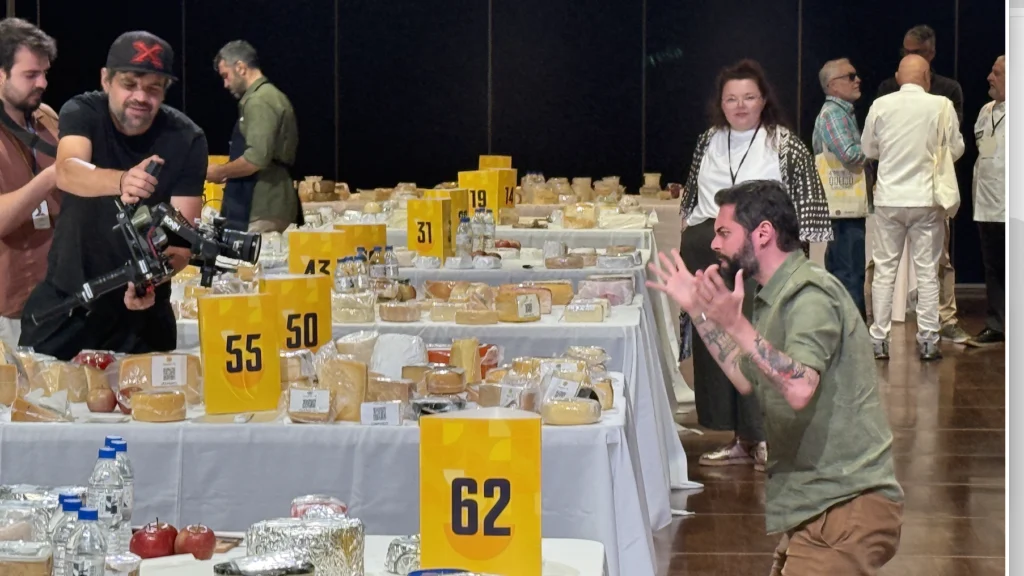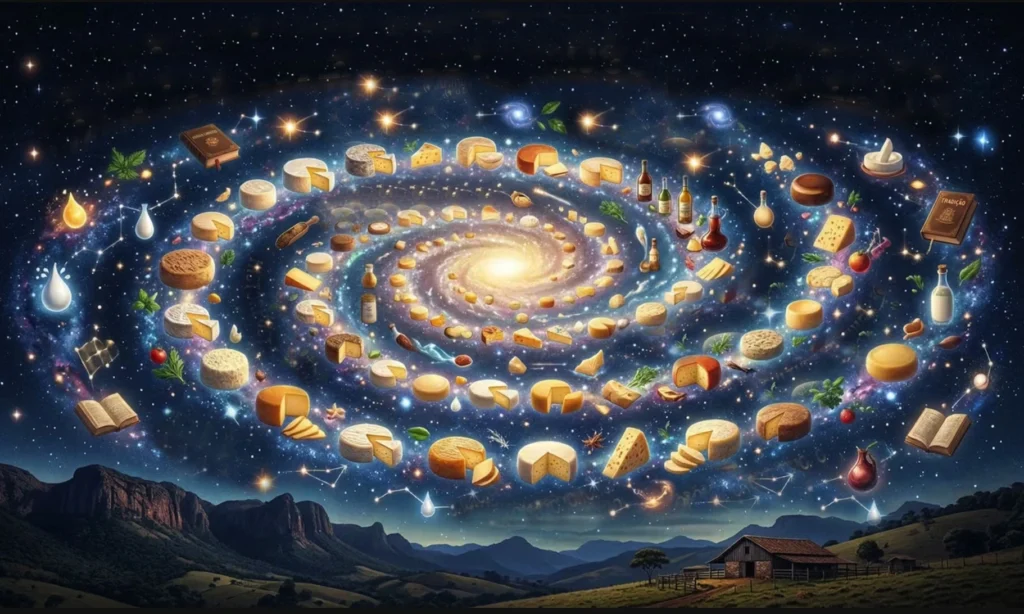
The Milky Way Program was one of the main activities for professionals at the 4th World Cheese Championship of Brazil 2026, held on April 17th and 18th at the B32 Theater in São Paulo. With a dynamic format in simultaneous sessions, the event brought together cheesemakers, producers, researchers, technicians, and cheese enthusiasts for a two-day journey of conferences, masterclasses, and debates about the present and future of the sector. "It was a very rich, highly technical event that offered several discussion panels and opportunities for future interactions," assessed Leonardo Acurcio, one of the organizers.

Science and practice side by side
The program began on Friday with the masterclass "Most Common Cheese Defects," by Professor Múcio Mansur Furtado, a leading expert in cheese technology. In parallel, the SEBRAE Panel featured Simone Goldman (Geographics, Opportunities and Challenges), João Paulo Arciprete (Management and Sustainability), and Valéria Pires (From Competition to Market – MT), demonstrating how support for micro and small businesses has transformed the reality of cheese dairies across the country.
Also on the morning of the 17th, the lecture “When territory becomes value – Italian DOP and IGP”, with the editor-in-chief of the magazine Professione Casaro Italy,Maíra Vasques Pessanha attracted those interested in obtaining protection linked to origin. Following this, she moderated a discussion with Lucilha de Faria (Serra da Canastra) and Estela Mares (Serro) about geographical indications in Minas Gerais. "It was a very good interaction. Cheesemakers from other regions who are seeking the same path," said Acurcio.
Tower of Babel of cheese
On Friday afternoon, one of the most emblematic moments was the panel “Cheeses in the world and in Brazil”, coordinated by Professor Antonio Fernandes (UFV). Participants included Martin Knossalla (Germany/DSM-Firmenich), Delphine Luhring (France/ENILEA Polingy), Marguerita Caccamo (Italy/CORFILAC Ragusa) and Bartosz Wilczyński (Poland).
“"Martin is a polyglot, he speaks Portuguese very well. He even gave a presentation in Polish, with translation done by him. It was a real Tower of Babel for us to talk about cheese."”
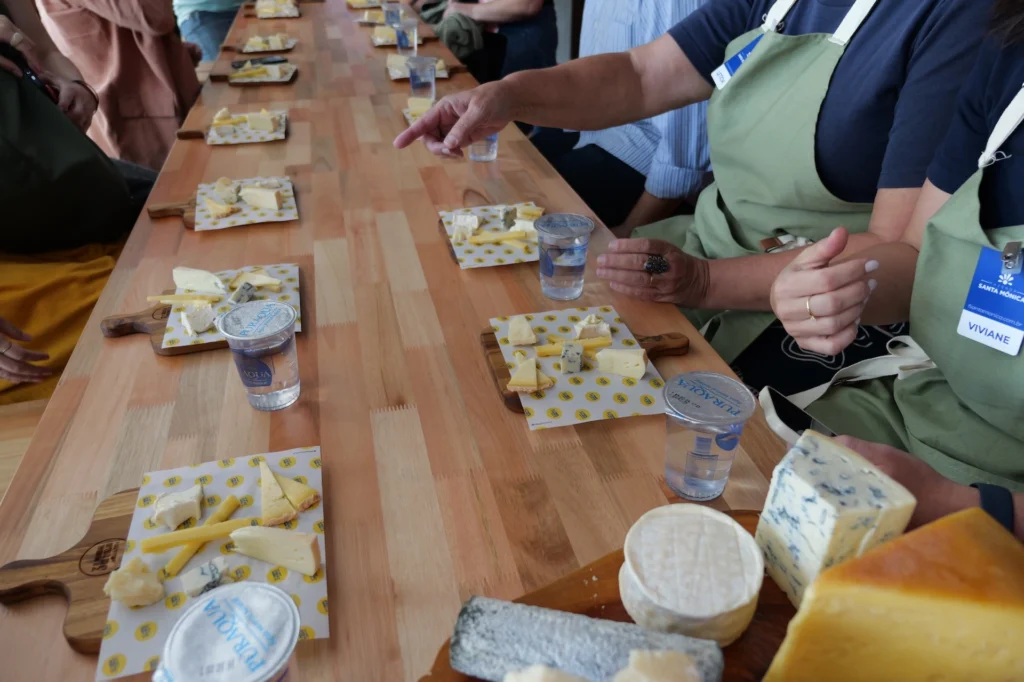
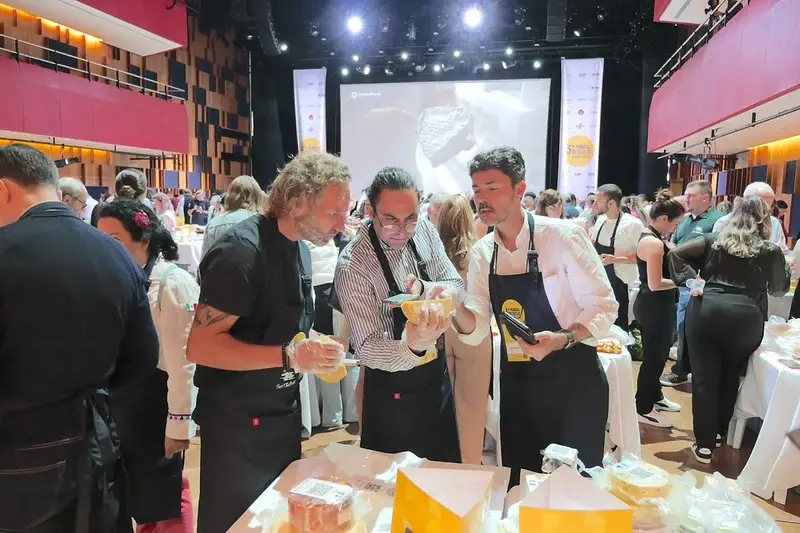
Also on Friday, specialist Rodrigo Magalhães (Global Food) led the packed lecture “How to master your process and stop 'guessing' about cheese,‘ with a practical tasting of cheeses fermented using lactic cultures proposed by the company. Simultaneously, Arnaud Sperat Czar (Fondation pour la Biodiversité Fromagère) defended the benefits of raw milk, and Elisabeth Schober (MST) shared the experience of cheese cooperatives in settlements as a tool for women's empowerment.
Legislation and sanitation
Saturday (18) began with a room dedicated to “Cheese Legislation in Brazil”, bringing together representatives from eight states (Amazonas, Espírito Santo, Goiás, Mato Grosso, Rondônia, Santa Catarina, São Paulo and Pará), federal deputy Zé Silva, author of the Artisanal Cheese Law and tax auditor Nelson de Andrade (MAPA), who explained the workings of the Arte Seal (Brazilian Inspection System for Products of Animal Origin). But there were producers from other states who lamented the absence of their inspectors.
“We saw scenarios ranging from states that don’t yet have any work being done to others with well-established initiatives,” reported Acurcio, who moderated the panel. “There was a promise of a letter of intent to the Ministry of Agriculture, Livestock and Supply (MAPA) and the formation of focus groups for follow-up.”
Also on Saturday, the panel “State of the Art of Brucellosis and Tuberculosis in Brazil” brought together Patricia Santana Ferreira (MAPA), Alexandre Blanco (SENAR-PR), Ivy Maggesi (SENAR-MG), producers Pèele Lemos (Fazenda Lano-Alto), Holorico Costa (Fazenda Serra Mons, Canastra) and agricultural engineer Franciele Rechembach Haselbauer (Queijaria Encantilado). “It was a frank, heated debate. MAPA has a consolidated position, but technicians and producers are asking for more dialogue,” summarized Acurcio.
In Room 2, the morning was dedicated to research on artisanal cheese: Uelinton Pinto (USP), Luís Augusto Nero (UFV), and Alline Tribst (UNICAMP) presented studies on microbiology, biopreservation, and vegetable coagulants. Following this, the poster session “Cheese: Prism of Science” took place, with 46 works displayed in various fields of knowledge, but the vast majority from microbiologists, after all, cheese is the most living food that exists.
“We had participants ranging from extension workers from São Paulo to university professors, students from USP, UFV, Unifor, UFTPR, and the Northeast. A very diverse and robust participation for a first edition of the poster competition,” celebrated Acurcio.
Goat, buffalo, and sheep cheeses, and the art of being a cheesemaker.
Saturday afternoon featured roundtables on small ruminants. Luciano Piovesan (Expedição Béeé Brasil e América), Rejane Maia (IFCE), and Andresa Bianchi (Casa Bianchi) discussed the state of the art in dairy goat and sheep farming. Following that, Filipe Paulino and Ronaldo César (Búfala Almeida Prado) spoke about buffalo cheese production.
Closing the program, the panel “The Art of Being a Cheesemaker”, with master cheesemakers Annick Polèse and Débora Pereira, and the panel “Cheesemakers of Brazil” with Anderson Aguiar (Best Cheesemaker 2024), Maycon Oliveira (2nd Best Cheesemaker 2026), Adan and Faviane (Queijo é Vida), who discussed the role of the cheesemaker in bridging the gap between producer and consumer.
“"The rooms were full, with great participation. We had over 130 participants in total. It was a really great interactive event," concluded Leonardo Acurcio.
The Milky Way project was organized by researchers Andréa Badaró (SerTãoBras/UFTPR), Antonio Fernandes (SerTãoBras/UFV), Débora Pereira (SerTãoBras/Cifca), Leonardo Acurcio (SertãoBrás/UNIFOR-MG), Luis Nero (Brafp/UFV), Uelinton Pinto (Brafp/USP), and Débora Pereira (SerTãoBras/Cifca).